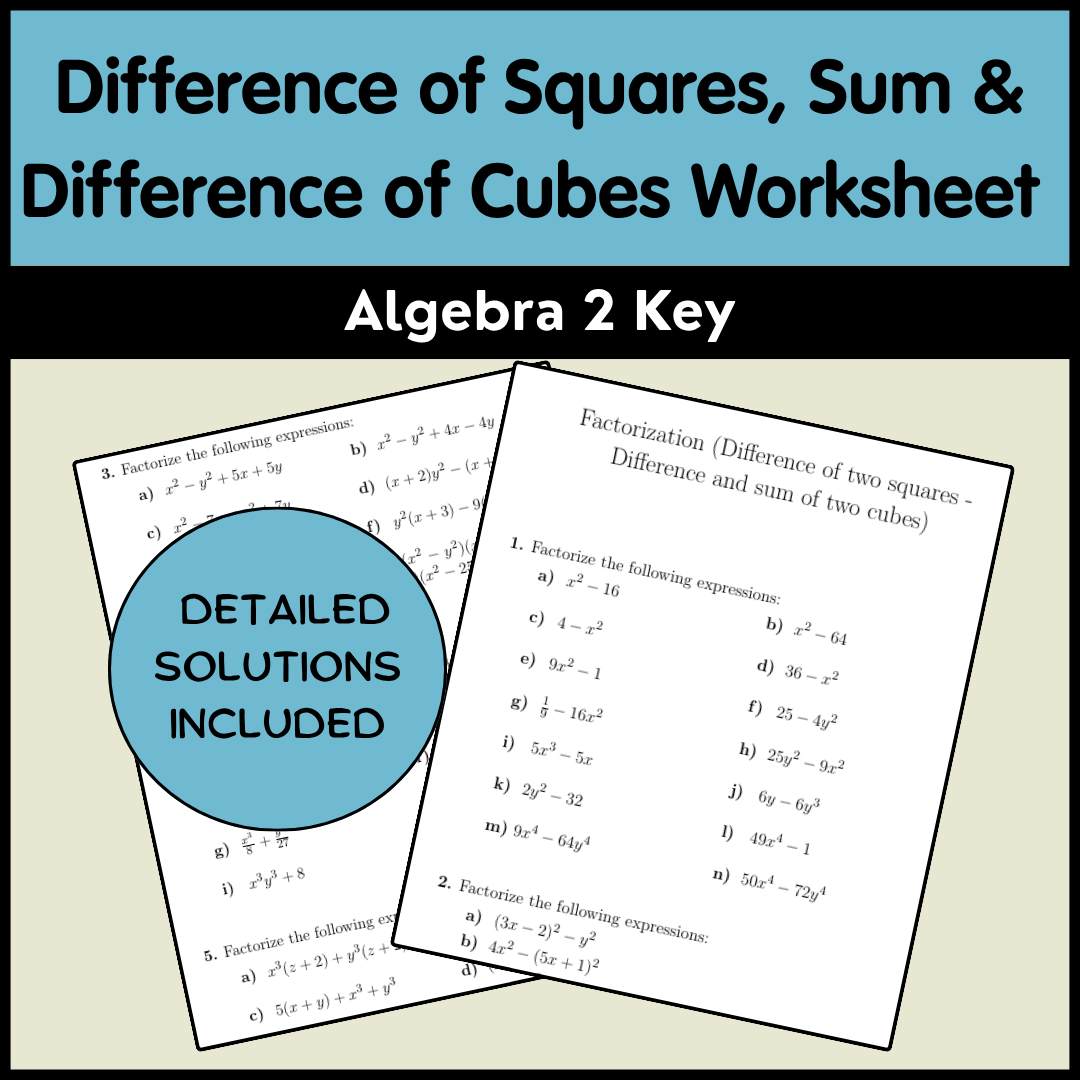
Difference of Squares, Sum & Difference of Cubes Worksheet | Algebra 2 Key
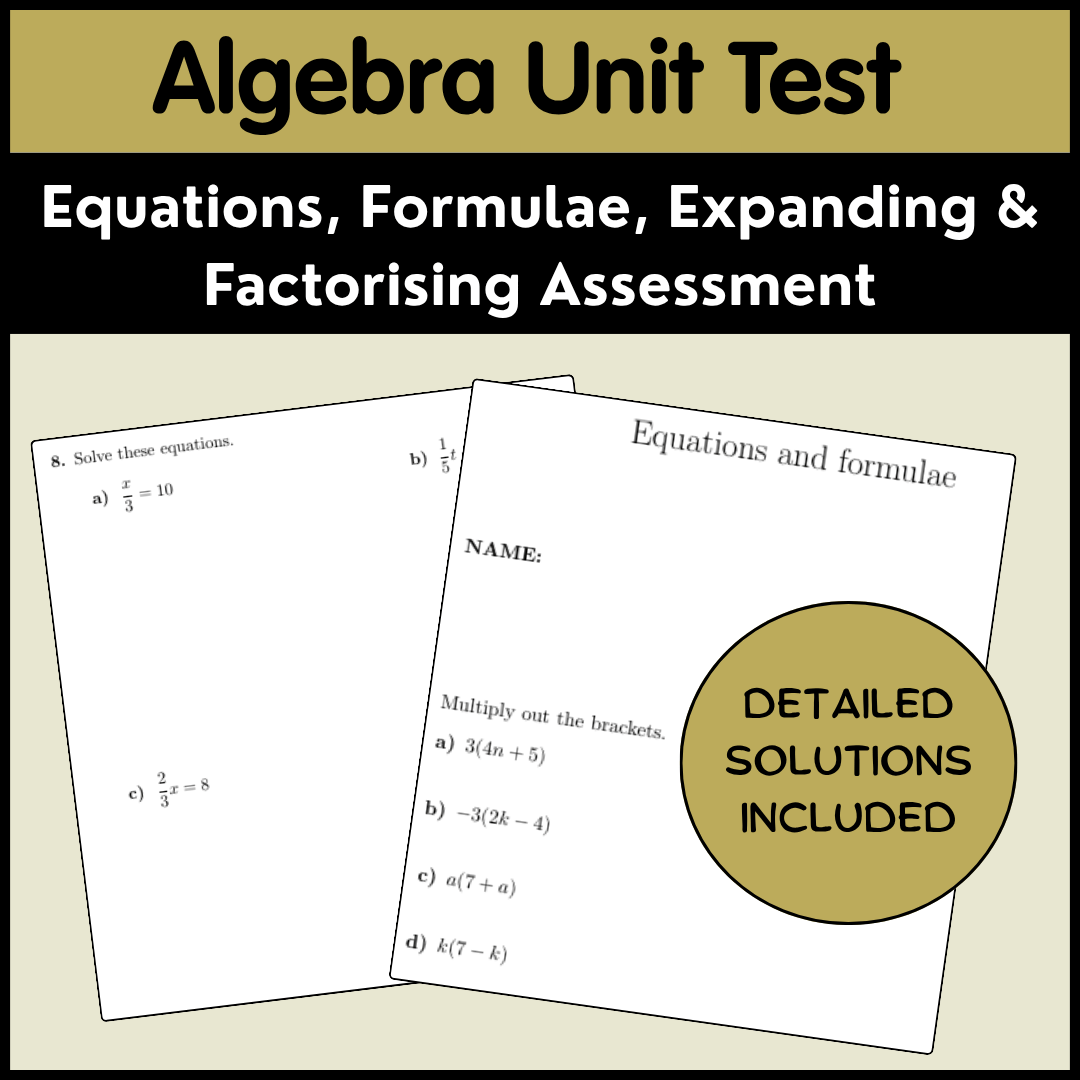
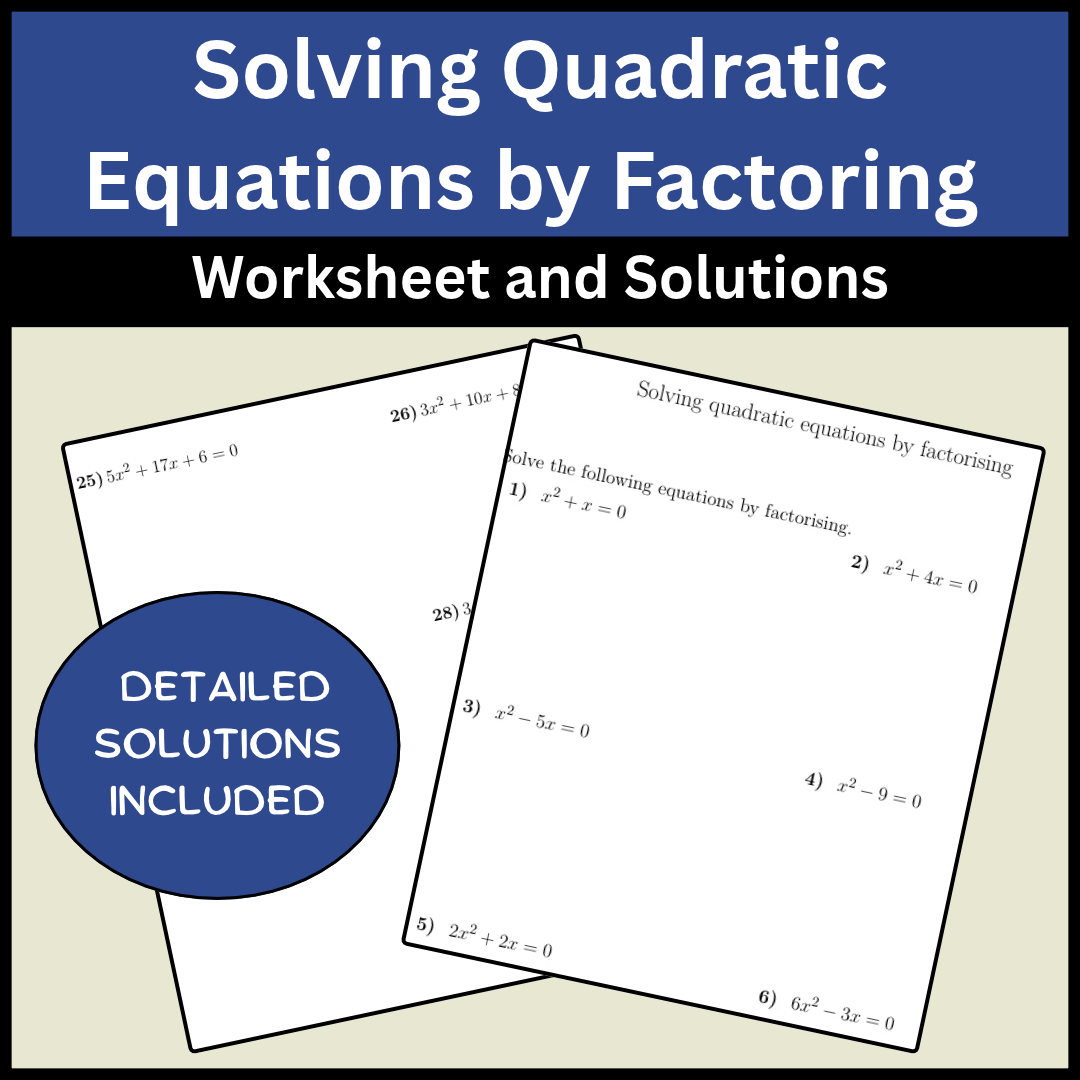
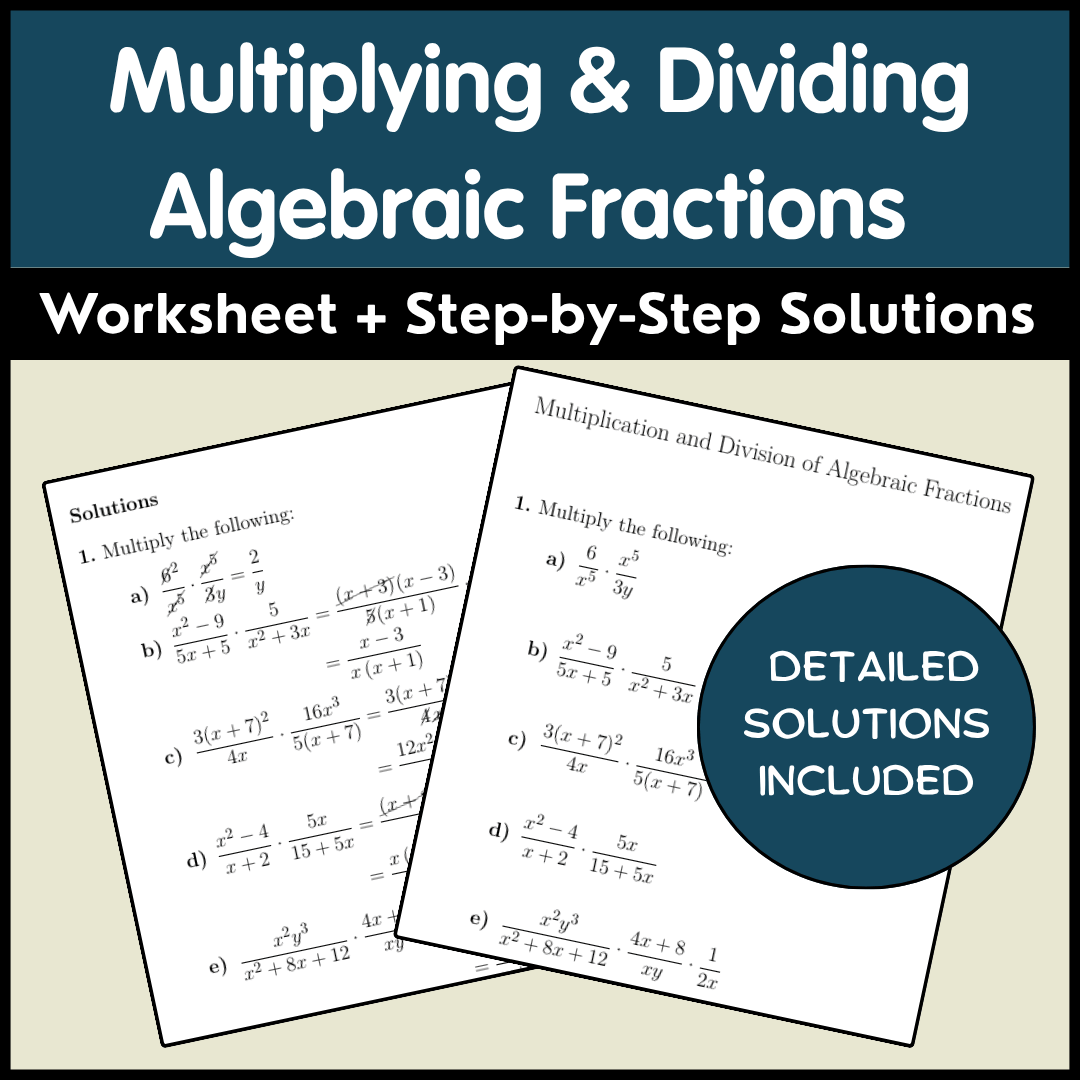
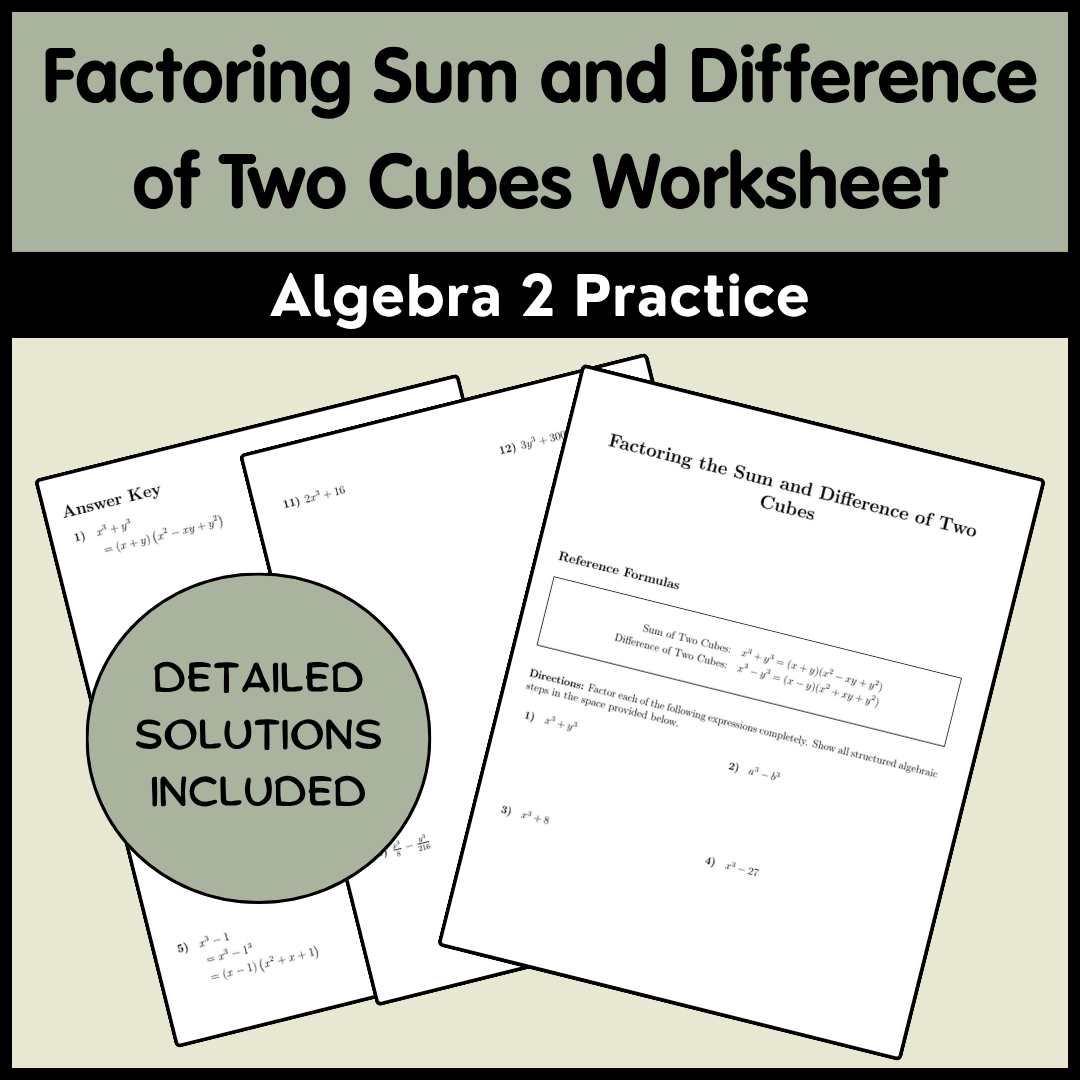
Are you looking for a zero-prep, rigorous resource to help your advanced algebra students master special product factoring? This Difference of Squares, Sum & Difference of Cubes Worksheet provides targeted, scaffolded practice designed to take students beyond simple distribution into deep structural understanding! Perfect for Algebra 2, Pre-Calculus, and advanced high school math paths, this printable practice pack guides learners step-by-step from foundational identity expansion to nested grouped polynomials, fractional cubic coefficients, and numeric calculation tricks. Equip your classroom with a clean, well-structured layout that includes complete, fully worked step-by-step solution keys!
Conquer Special Products, Squared Polynomials, and Cubic Identities with Confidence!
Stop spending your valuable prep time drafting complex polynomial factoring questions. This comprehensive high school algebra practice packet is meticulously structured to move students from baseline conceptual recognition to advanced geometric and algebraic manipulation. It bridges the gap between mechanical distribution rules and formal deductive mathematical reasoning.
Whether you need a core classroom lesson, an independent study packet, a targeted test review, or a robust sub plan, this print-and-go resource delivers excellent academic rigor with absolutely zero teacher preparation.
📈 Why Teachers Love This Resource:
- Scaffolded Learning Progression: Every section isolates a specific algebraic identity. It moves smoothly from basic visual squares to tricky binomial brackets, multi-variable cubes, and nested structural groupings.
- Unique Arithmetic Application: Section 6 shows students the real-world shorthand utility of algebraic identities by teaching them how to evaluate massive numerical squared products quickly without a calculator.
- Deep Factor Readiness Tracking: Section 3 features mixed grouping variables paired with difference of squares, forcing students to work backward and analyze multi-step structures.
- Complete Step-by-Step Solutions: A full answer key is included showing the exact algebraic setups, conjugate splits, and full workflows for every single calculation and proof. This makes grading effortless and enables student self-checking!
- Spacious and Clean Layout: Provides students with plenty of room to write out their equations and work neatly, keeping student notebooks organized and reducing simple calculation mistakes.
📋 Detailed Problem Breakdown:
- Section 1: Foundational Difference of Squares – 14 problems transitioning systematically from basic integers and simple variables to fractional coefficients and multi-variable structures.
- Section 2: Complex Binomial Squares – 8 challenges expanding into multi-term grouped variables, explicitly testing sign changes and negative factor distributions.
- Section 3: Combined Grouping and Identity Factors – 8 high-level questions requiring intermediate common factor extractions across nested structures.
- Section 4: Sum and Difference of Cubes – 10 problems applying cubic identities, expanding past integers into multi-variable fractions and index structures.
- Section 5: Advanced Cubic Grouping – 4 multi-step cubic challenges utilizing nested variable brackets to test structural math patterns.
- Section 6: Numerical Evaluations – 4 practical arithmetic applications demonstrating how to multiply massive values quickly using the difference of squares shortcut.
📌 Education Standards Covered:
- Common Core State Standards (CCSS):
- HSA-APR.C.4: Prove polynomial identities and use them to describe numerical relationships (Numerical evaluations).
- HSA-SSE.A.2: Use the structure of an expression to identify ways to rewrite it (Squares, cubes, and nested brackets).
- HSA-APR.A.1: Understand polynomial operations and the closure system of polynomial multiplication and factorization.
- Texas TEKS:
- A2.7B & A2.7C: Advanced high school polynomial operations, additions, subtractions, multiplications, quotients, and structural patterns.