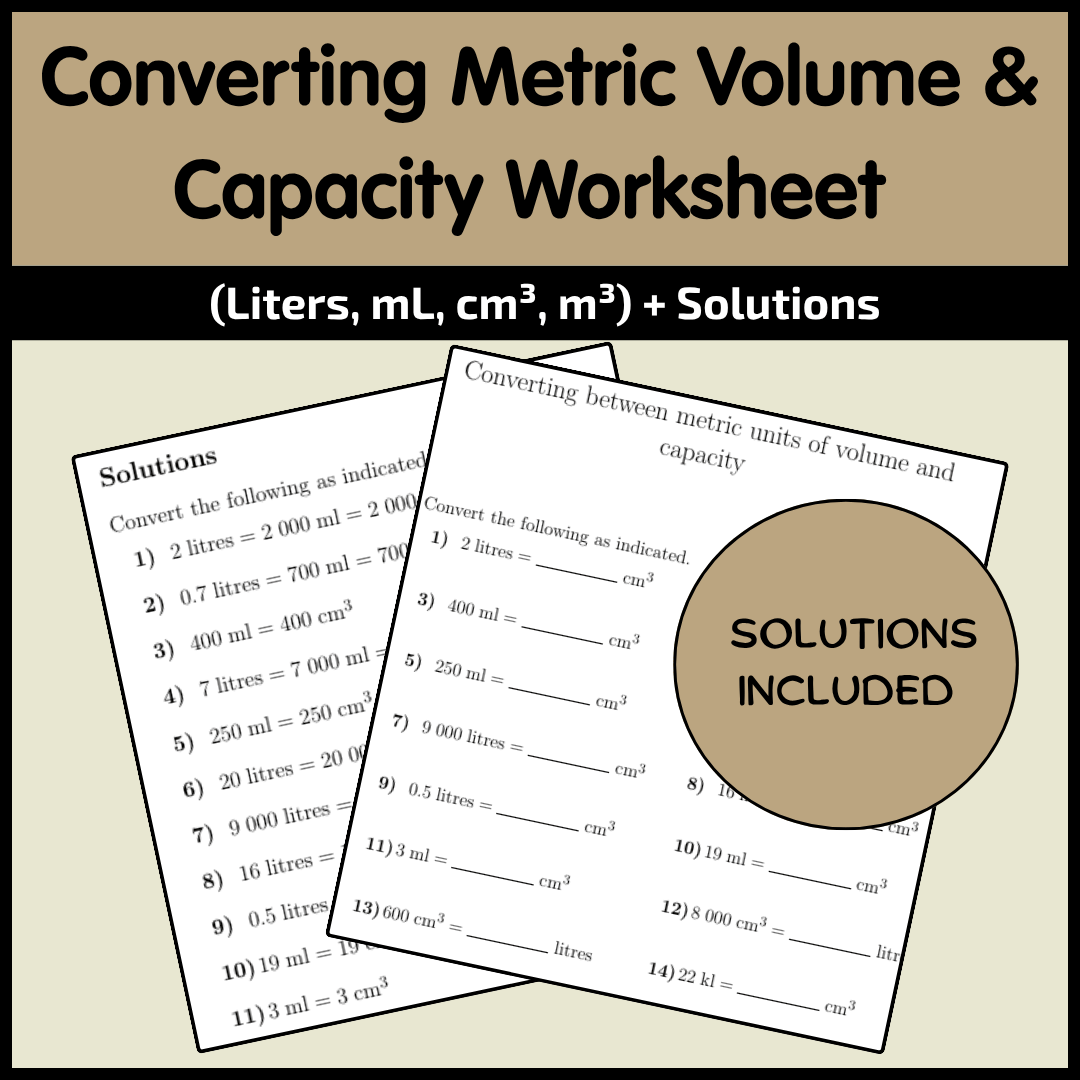
Converting Metric Volume & Capacity Worksheet (Liters, mL, cm³, m³) + Solutions
On Sale
$1.00
$1.00
Master metric conversions with this comprehensive, no-prep volume and capacity worksheet! Features 20 carefully structured problems bridging liquid metrics and solid volume dimensions, including liters, milliliters, kiloliters, cubic centimeters, and cubic meters. Includes a full step-by-step solutions key perfect for grading, independent work, or sub plans. Ideal for Grade 5–8 math and science students.
Looking for a rigorous, no-prep resource to help your students master metric conversions between volume and capacity?
This comprehensive Converting Metric Volume and Capacity Worksheet provides targeted skill-building practice to help middle school students confidently bridge the gap between liquid capacity and solid volume dimensions. Whether you need a focused homework assignment, an in-class fluency check, or a reliable emergency sub plan, this resource is ready to print and use immediately.
Featuring 20 thoughtfully sequenced problems on a clean layout, this single-page worksheet with complete answers is perfectly aligned with upper elementary and middle school measurement standards.
📦 What’s Included in This Resource?
High-Utility Student Worksheet: A clean, minimalist layout with 20 distinct conversion problems and clear blank lines for student answers.
Comprehensive Conversion Matrix: Spans a wide variety of metric units including liters, milliliters, kiloliters, cubic centimeters (cm3), and cubic meters (m3).
Full Step-by-Step Solutions Key: Every single question is fully answered with the middle conversion step shown (such as converting liters to milliliters before matching cubic centimeters), making grading or student self-checking effortless.
📊 Core Unit Conversions Covered:
This assignment challenges students to understand the structural equivalents across metric systems, including:
Liquid Capacity to Cubic Volume: Converting liters to cm3 or milliliters to cm3.
Large Scale Metrics: Converting kiloliters to cm3, kiloliters to m3, or cubic meters to liters.
Inverse Operations: Converting cubic centimeters back into liquid liters.
💡 Why Teachers Love This Resource:
Zero Prep Required: Simply print and hand out! Ideal for standalone measurement lessons or cross-curricular middle school science physics metrics review.
Complete Double-Check Answers: Saves hours of marking time and lets you easily display the step-by-step math on a projector for whole-class review.
🎯 Target Audience & Courses:
Grade Levels: 5th Grade, 6th Grade, 7th Grade, and 8th Grade.
Subject Areas: General Mathematics, Measurement and Data, Middle School Science, and Physics Foundations.