Introduction to Multiplication Equal Groups Worksheet - Problem Set 2
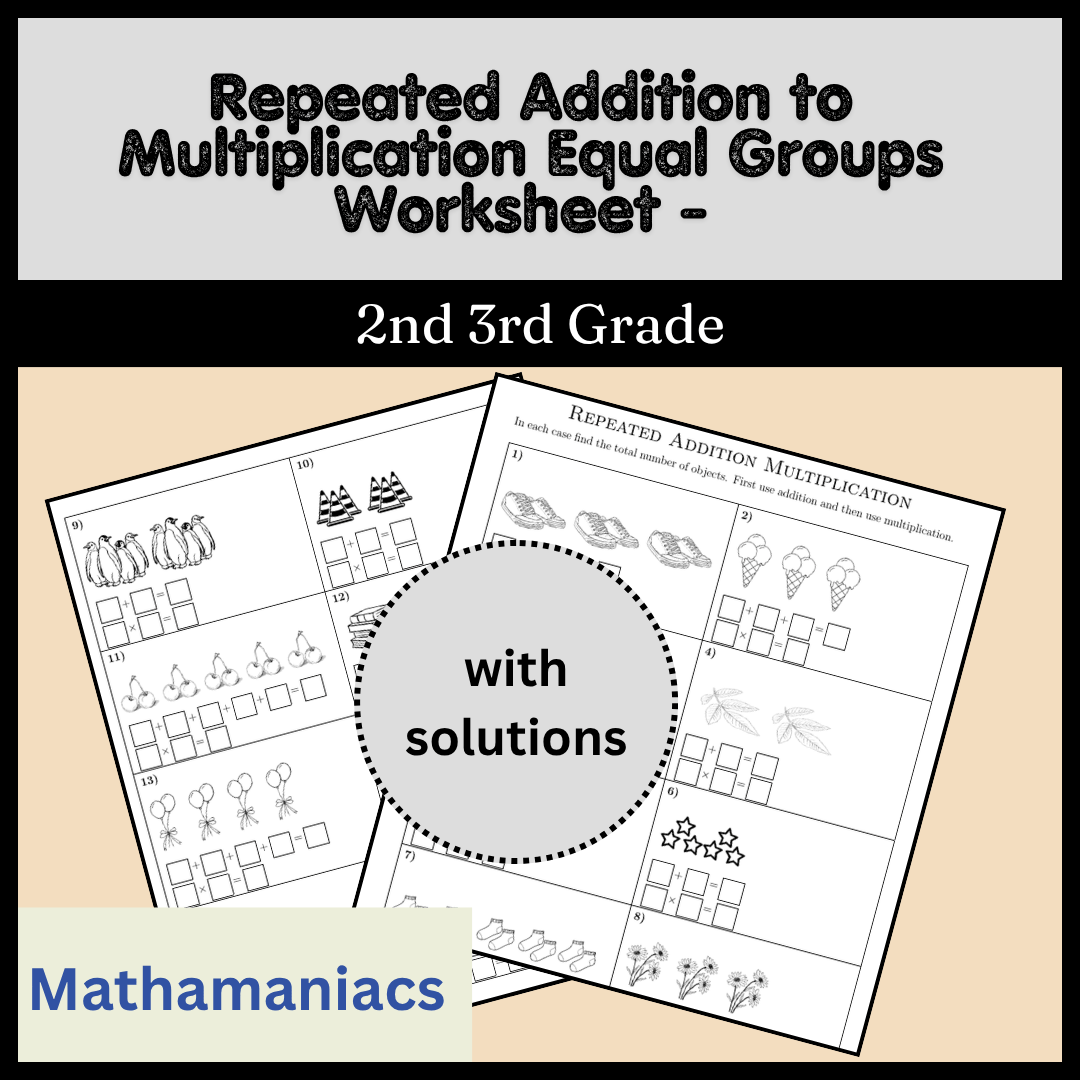
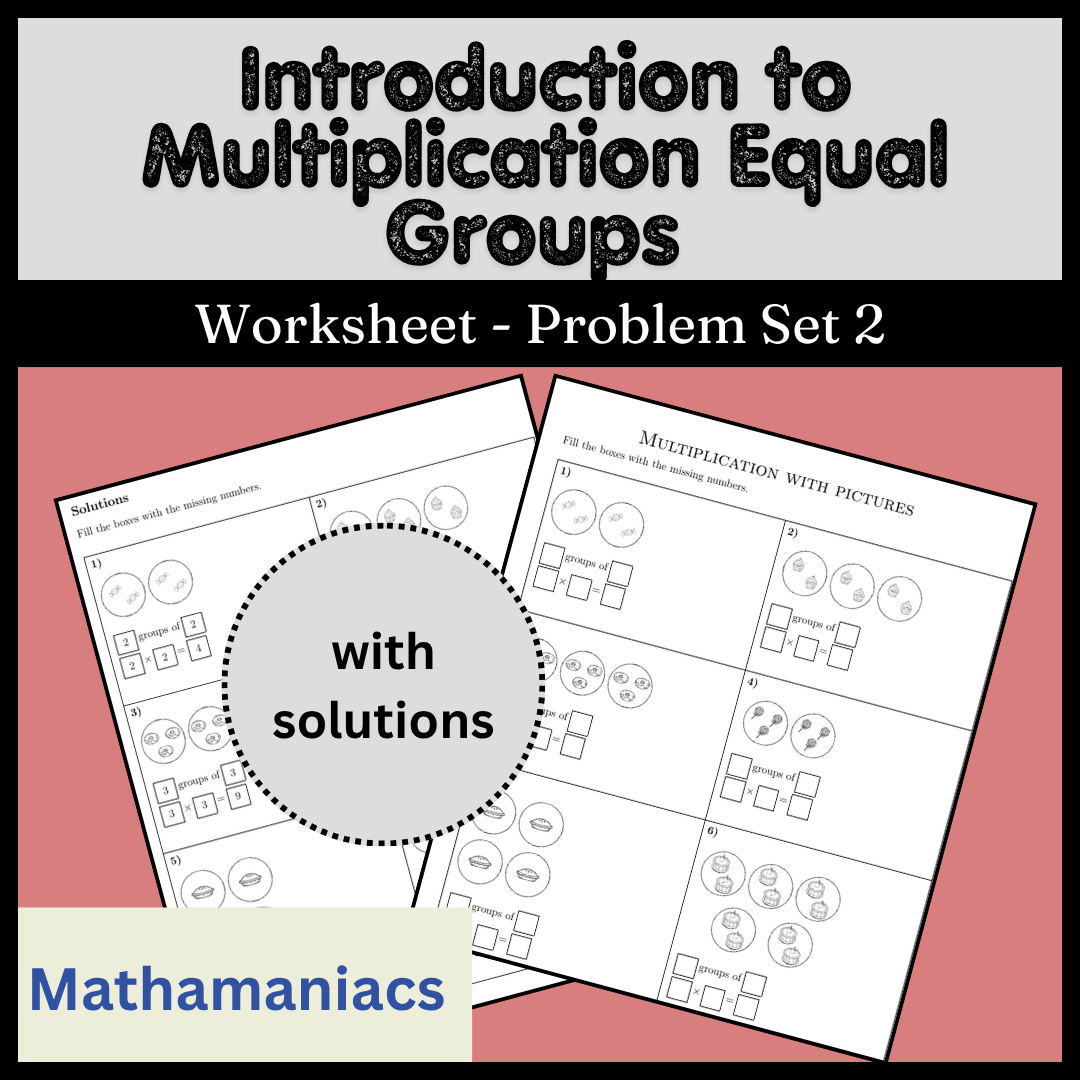
A no-prep printable worksheet for introducing the notion of multiplication using the concept of “groups of”. There are pictures to help students understand multiplication as repeated addition. There are 18 problems. Solutions are included.
Build a rock-solid foundation for early multiplication with this high-density, visual math worksheet pack. Specifically designed for 2nd Grade and 3rd Grade students, this resource uses clear, concrete picture groups to help learners transition smoothly from repeated addition to formal multiplication equations.
This product is Problem Set 2, making it the perfect follow-up resource for extra practice, homework, morning work, or independent math centers.
📦 What is Included in this Resource?
This student-ready practice packet focuses on scaffolds that prevent common conceptual mistakes: [1]
- Equal Groups Practice Sheets: Clean, organized problem fields showing clear visual groupings of engaging icons.
- Structured Sentence Frames: Boxed templates that guide students step-by-step to fill in: "___ groups of ___ = ___".
- Equation Bridges: Dedicated spaces for students to translate their visual findings into complete, standard multiplication equations (e.g., 3 x 4 = 12).
- Complete Teacher Answer Key: A full, exact copy of the worksheet featuring all correct numbers and equations filled in for rapid, stress-free grading.
🔍 Core Skills Developed:
- Identifying the total number of distinct groups in a visual set.
- Counting the exact number of objects contained inside each group.
- Understanding the commutative concept of multiplication through structural models.
- Writing accurate horizontal multiplication sentences based on pictorial data.
📐 Core Standards Covered:
- Common Core (US): 3.OA.A.1 (Interpret products of whole numbers through equal groups) and 2.OA.C.4 (Use addition to find totals in equal arrangements/arrays).
- UK Curriculum: Key Stage 1 & Key Stage 2 Year 2 / Year 3 Maths (Recognising, writing, and solving early multiplication using concrete objects, pictorial representations, and arrays).